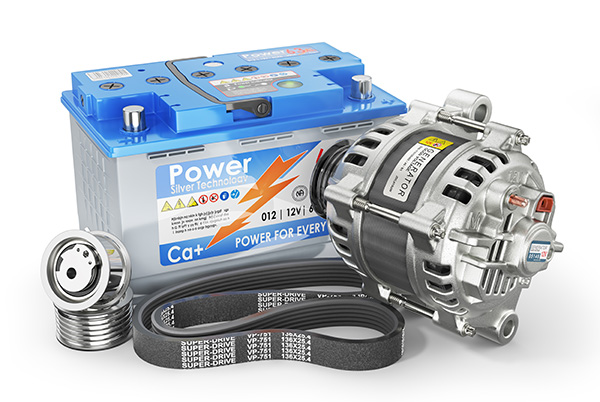
Automatic start-stop systems shut the engine off when the vehicle comes to a stop and restart it when the driver is ready to move again. The goal is to reduce fuel use and emissions during idling, especially in traffic. Because the engine may restart dozens of times during a commute, many drivers wonder whether all those extra starts wear out the starter, battery, alternator, or engine faster.
The short answer is that vehicles equipped with start-stop technology are built for that extra workload. They normally use upgraded batteries, reinforced starting components, and control strategies designed specifically for frequent restarts. Problems are more likely when one of those components weakens, the wrong replacement battery is installed, or the charging system no longer operates correctly.
Start-Stop Systems Use Heavy-Duty Starting Components
A conventional starter may only operate a few times during a normal day. A start-stop vehicle can cycle the engine far more often, so manufacturers do not simply install the same starter and expect it to survive.
Depending on the vehicle, the system may use a reinforced starter motor, stronger bearings, improved brushes, revised gears, or an integrated starter-generator. Some designs can restart the engine very quickly because the computer knows the crankshaft position and can coordinate fuel and ignition immediately.
The Battery Works Much Harder
The battery sees one of the biggest changes in a start-stop vehicle. When the engine shuts off at a traffic light, the battery continues powering lighting, climate controls, audio, computers, pumps, and other electrical equipment. A few moments later, it also has to supply enough current to restart the engine.
For that reason, many vehicles use AGM or EFB batteries instead of a conventional flooded battery. These designs tolerate repeated charge and discharge cycles better. Installing a standard battery where an AGM or EFB unit is required can lead to short battery life, unreliable start-stop operation, or charging problems.
Signs the battery may be struggling include:
- Start-stop stops working even though no warning light is present
- The engine cranks more slowly than it used to
- Interior lights dim noticeably during startup
- A battery or charging warning appears
- The vehicle needs frequent jump-starts
The system may disable start-stop before the battery becomes completely weak. That is often intentional because the vehicle is trying to preserve enough charge for dependable starting.
Does the Alternator Wear Out Faster?
Start-stop vehicles place greater demands on the charging system, but the alternator is also designed around those demands. Many use smart charging systems that vary output according to battery condition, electrical load, engine operation, and driving conditions.
Some vehicles use a belt-driven starter-generator rather than a traditional alternator. Others may recover energy during deceleration and use it to recharge the battery more aggressively. This is one reason charging voltage on a modern vehicle may not remain at one fixed number all the time.
A failing alternator can prevent start-stop from operating, but repeated engine restarts do not automatically mean the alternator is being damaged. The more important concern is whether the battery, charging system, and control modules are working together as intended.
What About Engine Wear From Repeated Restarts?
Cold starts create more engine wear than warm restarts because oil has had time to drain away and the engine has not yet reached operating temperature. Start-stop events are different. They normally happen after the engine is already warm and oil has recently been circulating through bearings, camshafts, and other moving parts.
Modern engines designed for start-stop operation may also use bearing materials, oil-control strategies, and lubrication systems selected with frequent restarting in mind. The engine computer can prevent shutdown when conditions are not appropriate, such as when the engine is too cold, the battery is weak, or additional cooling is needed.
Why the System Sometimes Refuses to Shut the Engine Off
Drivers often assume something is wrong when start-stop does not activate at every traffic light. In reality, the computer considers many conditions before deciding whether to shut the engine down.
The system may remain inactive when:
- The battery charge is too low
- The engine has not warmed sufficiently
- Cabin heating or cooling demand is high
- The steering wheel is turned sharply
- The vehicle is on a steep grade
- The hood or a door is open
- Electrical demand is unusually high
- The engine or transmission needs additional cooling
These conditions vary between manufacturers. Start-stop is designed to operate only when the vehicle can restart reliably, and driver comfort will not be affected too much.
Why the Correct Replacement Battery Is So Important
Replacing a start-stop battery is not always as simple as installing a battery with similar physical dimensions. The replacement must have the correct chemistry, capacity, cold-cranking rating, and reserve performance.
Many European vehicles also require battery registration or adaptation after replacement. This tells the energy-management system that a new battery has been installed so the charging strategy can be adjusted correctly. Skipping that step may shorten battery life or cause the system to charge it improperly.
An inspection of the battery and charging system is worthwhile whenever start-stop begins behaving differently. Battery testing should consider state of charge and actual capacity rather than relying only on resting voltage.
Can You Turn Start-Stop Off?
Many vehicles provide a button that disables start-stop until the next key cycle. Others allow fewer driver choices. Turning the system off temporarily usually does not damage the vehicle, but permanently modifying or bypassing it may affect warning systems, charging strategy, emissions operation, or warranty coverage, depending on the vehicle.
If you dislike the way the system feels, there is nothing wrong with using the factory disable function when available. If the system suddenly stops working on its own, however, it is better to find out why. A weak battery is a common reason, and ignoring it can eventually leave the vehicle unable to start.
Start-Stop Components Still Need Proper Care
Start-stop technology does increase the number of engine starts, but the vehicle is engineered for that use. Problems usually appear when the battery ages, charging performance falls, starter components wear, or an incorrect replacement part is installed.
Regular maintenance should include battery testing, attention to charging-system warnings, and use of the correct engine oil and battery specification. If the system becomes inconsistent, testing can determine whether it is responding normally to operating conditions or whether a component is beginning to fail.
Get Start-Stop System Service in Folsom, CA, With Foreign Autohaus
Foreign Autohaus in Folsom, CA, can test start-stop batteries, charging systems, starter components, and related electronic controls.
If your start-stop system has stopped working, restarts slowly, or behaves differently than it used to, contact us to schedule service.