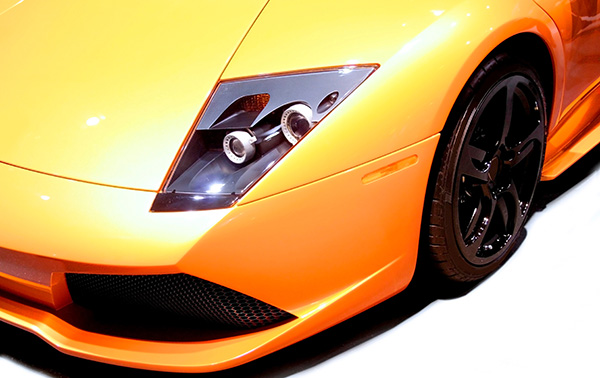
Mention Lamborghini to almost any car enthusiast in America and an image appears immediately: a low, dramatic supercar with a roaring engine and doors that seem to belong in a science-fiction film. That's quite a journey for an Italian company that began building grand touring cars in the 1960s. Lamborghini didn't become a household name in the United States by following the ordinary luxury-car formula. Its designers pushed the shape of a sports car into unfamiliar territory, and American enthusiasts embraced the result.
The story runs from a small factory in northern Italy to bedroom posters, car shows, and today's supercar culture.
Lamborghini's Italian Origins in Sant'Agata Bolognese
Ferruccio Lamborghini founded Automobili Lamborghini in 1963 in Sant'Agata Bolognese, Italy.
He had already built a successful business producing tractors and other equipment. For his next venture, he wanted a refined, powerful grand touring car with the comfort to cover long distances and the performance to excite experienced drivers.
The company presented its first production car, the 350 GT, in 1964. It was elegant and relatively restrained compared with the vehicles that later defined the brand. Under the hood was a sophisticated V12 engine. That combination of mechanical ambition and Italian coachwork gave the newcomer credibility in an industry already crowded with established names.
The Miura Changed What a Supercar Looked Like
The Miura arrived in 1966 and changed the conversation. Instead of putting the engine ahead of the driver, Lamborghini placed the V12 behind the passenger compartment, across the chassis. The result was a low, wide machine with proportions unlike a conventional front-engine grand tourer.
The Miura's design became central to the idea of the modern mid-engine supercar. The sweeping body and dramatic stance made it memorable even to people who never drove one. American automotive magazines and enthusiasts had something new to discuss: a car whose shape seemed to announce performance before the engine started. It wasn't simply transportation for wealthy buyers. It was a rolling theater.
How the Countach Became an American Poster Car
In 1971, Lamborghini unveiled the Countach prototype. The production Countach followed in 1974. Its sharp wedge profile, broad body, and upward-opening doors became some of the most recognizable design elements in automotive history.
What turned the Countach into the poster car for a generation of American enthusiasts?
For many American enthusiasts, the Countach was a car first encountered through photographs, posters, television, or a model on a shelf. It didn't need to be seen in person to leave an impression. Even people who couldn't name its engine or performance specifications knew the silhouette. The Countach gave the brand a lasting visual identity in U.S. popular culture, where performance cars were increasingly celebrated as objects of design and aspiration.
That cultural recognition built an audience far larger than the number of cars sold.
The American Market Helped Shape Lamborghini's Story
American buyers and automotive regulations influenced the vehicles Lamborghini produced and sold. The Jarama, introduced in 1970, was developed with particular interest in the U.S. market. Over the decades, manufacturers also had to account for American safety and emissions requirements, which affected how certain imported performance cars were configured. The business relationship grew closer in 1987 when the American automaker Chrysler acquired Lamborghini.
The Diablo project was completed during Chrysler's ownership, and the Diablo debuted in 1990. Later ownership changes brought Lamborghini into the Audi Group in 1998, supporting a period of wider product development. American demand remained part of the larger international story, even though the cars retained their unmistakable Italian character.
Diablo, Gallardo, and Modern Lamborghini Performance
The Diablo carried the brand into the 1990s with a dramatic V12-powered design. The Murciélago arrived in 2001, followed by the Gallardo in 2003. Over time, Lamborghini broadened its appeal without abandoning the sharp styling and powerful engines that made earlier models famous. The Gallardo introduced many new buyers to a more accessible point within the brand's exotic-car range, while later models such as the Aventador and Huracán kept that high-performance identity alive.
The Urus brought the Lamborghini name into the performance SUV market, reaching a different group of drivers. Today, electrification also plays a role in the company's engineering direction, showing that the brand's technology changes even when its visual identity remains unmistakable.
Why Lamborghini Became Part of U.S. Car Culture
There was never just one reason. Lamborghini combined engineering, styling, scarcity, and a strong emotional response in ways few cars could match. Several influences helped that reputation travel across the Atlantic:
- Unmistakable mid-engine supercar proportions
- Bold shapes that stood out in photographs
- V12 sound and dramatic performance
- Appearances throughout American popular culture
- Enthusiast gatherings and exotic-car events
- A design identity shared across generations
- The culture around these cars extends beyond ownership.
People visit shows to photograph them, collect scale models, follow restoration projects, and learn about the engineering behind the bodywork. The teenager who admired a Countach decades ago is often the enthusiast bringing the family to an exotic-car event today. We love hearing which Lamborghini first captured someone's imagination, because the answer is rarely the same.
What Owning an Exotic Italian Car Teaches You About Maintenance
The excitement of a supercar is matched by its engineering complexity. Low ride height, performance tires, tightly packaged engines, specialized fluids, and cooling systems demand thoughtful service. A supercar spends most of its life parked, but does that mean it needs less maintenance? Even routine maintenance requires following the correct procedure for the exact model, generation, and equipment.
Exotic vehicles also spend time parked, and that creates its own concerns. Low mileage doesn't excuse neglecting the battery, tire age, fluids, seals, and service records. A dramatic-looking car still depends on brakes, tires, and stable electrical power for every safe drive. Collectors protect value by documenting the work and addressing problems before they spread to nearby components. For owners of European performance cars, our advice starts with service records, safe storage, and the correct procedures for the model.
European Performance Car Care in Folsom, CA
At Foreign Autohaus in Folsom, CA, we understand the interest that draws drivers toward European performance vehicles. For owners and enthusiasts, the history makes these machines more than a set of specifications. The ownership experience also calls for careful maintenance and informed repair decisions.
From the 350 GT to the latest generations, Lamborghini's American legacy began with Italian creativity and grew because drivers never stopped looking twice.